Two unlikely monuments 4,000 miles apart honor the same 410 Mormon pioneers
“When I saw that Mormon Pond,” says one tourist, “I was like, ‘What are the Mormons doing all the way out here?’”
Spanish Fork • A Mormon historical marker in, say, Salt Lake City or Nauvoo, Illinois, or Palmyra, New York, is hardly surprising.
But in Iceland?
And with a companion memorial in Spanish Fork?
The two locales, though separated by 4,000 miles and half an ocean, share a connection and a heritage that has endured for more than a century.
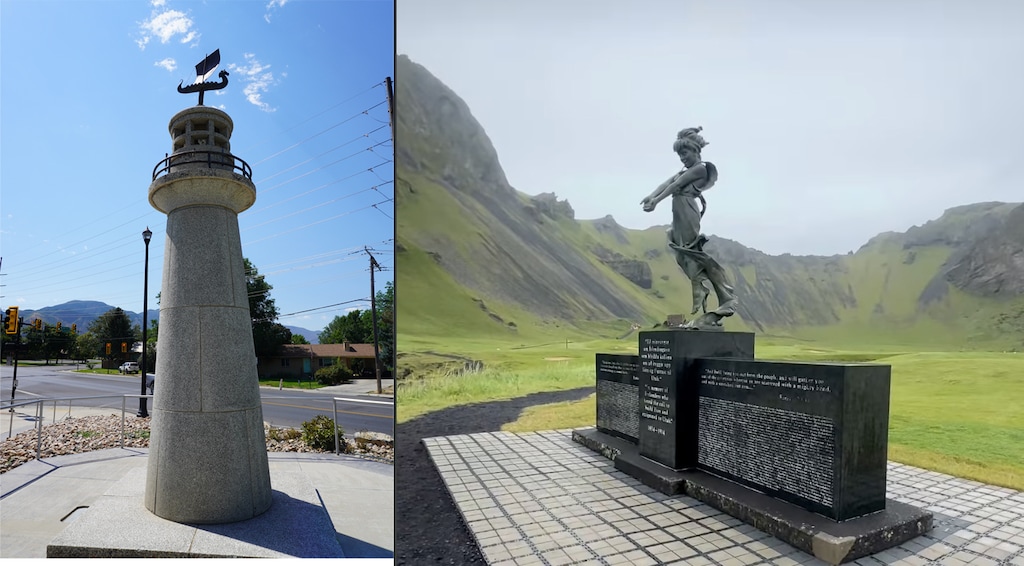
In the North Atlantic, on the coast of the volcanic island Vestmannaeyjar, rests a monument at a place known as Mormon Pond.
According to the nonprofit Ensign Peak Foundation, Mormon Pond received its name from the hundreds of Icelanders who were baptized at the site and joined The Church of Jesus Christ of Latter-day Saints.
Dedicated on June 30, 2000, the memorial features a sculpture of an 8-foot-tall angel, titled “The Messenger.” Below the angel are two panels listing the names of 410 Icelanders who came to the U.S. and founded the first permanent Icelandic settlement in North America — in Spanish Fork.
The center pedestal, in both Icelandic and English, reads: “In honor of the Icelanders that heard the call to build Zion and moved to Utah — 1854 to 1914.”
Although it rests in a remote location, the monument still receives visitors to this day.
Josh Smith, a Latter-day Saint graphic designer and filmmaker, posted a video on Instagram about visiting the monument at Mormon Pond on last week’s Pioneer Day.
Smith was camping on the coast of the Westman Islands in Iceland and saw a site on Google Maps named “Mormon Pond — LDS Church monument.”
Smith told The Salt Lake Tribune he was shocked when he first came across the monument and read the words “Spanish Fork” inscribed on its surface.
“When I saw that Mormon Pond,” he said, “I was like, ‘What are we doing here? What are the Mormons doing all the way out here?’”
Smith lived in Utah for part of his childhood and said it was a special experience for him to honor those Utah immigrants all the way across the Atlantic Ocean on Pioneer Day.
“You’re there on this little island in Iceland, and you think about these early Saints who hear about the gospel and they hear about this church all the way in Utah,” Smith said. “And you think about what it would take to cross the North Atlantic.”
As for Spanish Fork, the Utah County city pays homage to its Icelandic ties with its own memorial. Located at 800 E. Canyon Road, the monument rests in a small park with a decor that honors those Icelandic pioneers.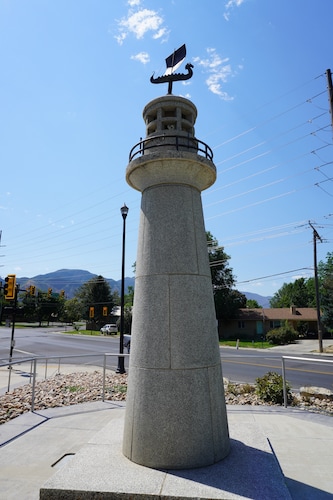
The lighthouse sculpture at Icelandic Memorial in Spanish Fork reflects the heritage of the seafaring Latter-day Saint settlers.
It features a twin wall of honor tallying the same 410 Icelandic immigrants who journeyed to Utah. At the center of the memorial stands a 1938 lighthouse topped by a small sculpture of an Icelandic ship, designed by John K. Johnson, to reflect the seafaring settlers.
The monument’s plaque calls Spanish Fork the “first settlement of Icelanders in the United States.”
It continues and explains that Icelander Leif Eiriksson ventured to America in A.D. 1000 and that eight centuries later, 16 pioneers from Iceland came to Utah and settled in Spanish Fork.
The links between the two monuments stretch even further.
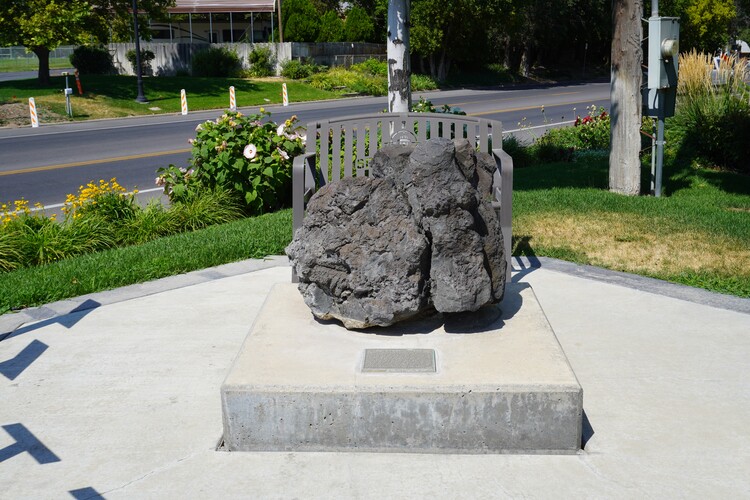
In 2005, a rock from Mormon Pond was brought from Iceland and added to the Spanish Fork memorial.
And locals continue to celebrate an annual Iceland Day, hosted by the Icelandic Association of Utah.
This year’s celebration is set for Saturday, Sept. 12.